We‘re taking a look at one of my favourite architecture style with this post!
And yes, I know that I am a few centuries late for what I usually write about. I am far into modern territory here, and left the time my witch witnessed behind for a while. And believe me, she is making a face as I type this.
But why am I doing this? Except of course for the fact that I love this building just as much as I love medieval cities that make me shiver with history?
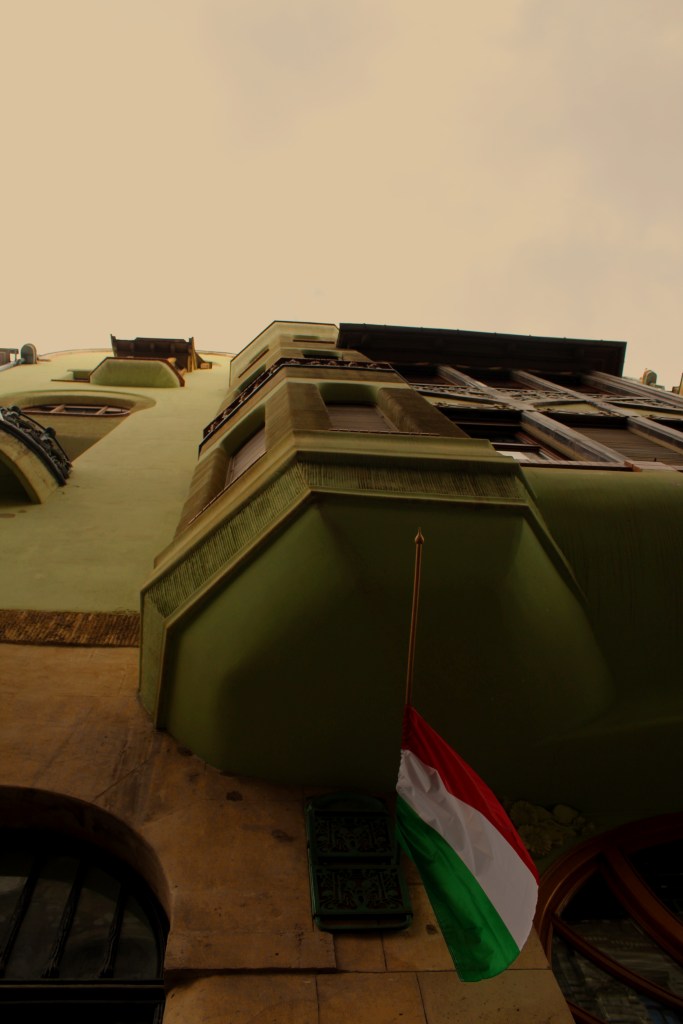
I took these photos in Budapest in Hungary last year, and am preparing myself to return tomorrow!
As happy as I am to spend more time in this beautiful city and this time even see how museums work over there, I struggled to come up with a history glimpse this week. My head is elsewhere, but I want to keep the routine going.
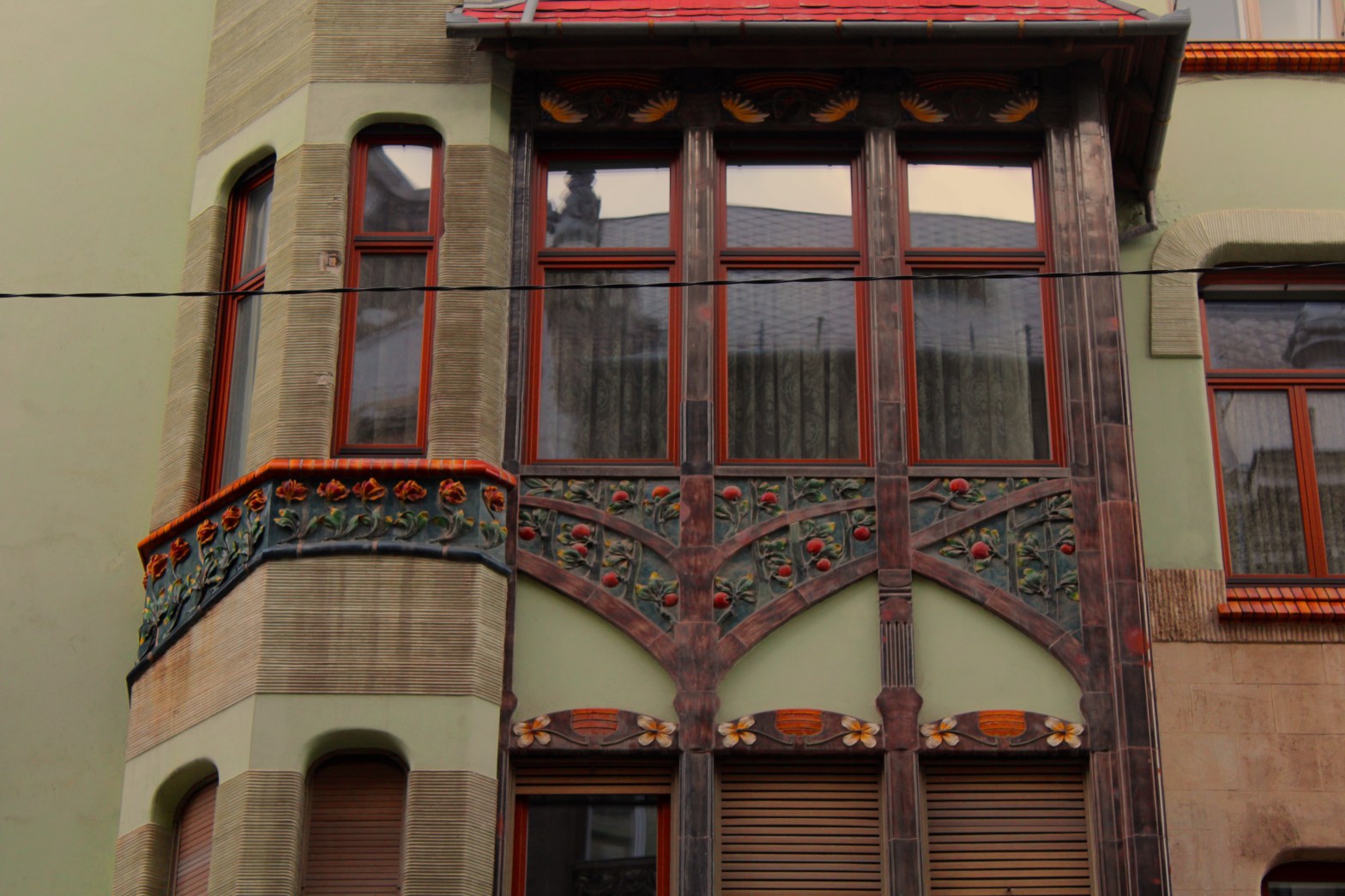
So, let‘s take a look at this beautiful example of an architectural style and era that is mostly known as „art nouveau“.
„It almost looks like something I would have seen in my days“, I witch now finds her way into this post. „Just … a bit different.“
She is right about that. Although seen as a head start into the modern era, it still looks old fashioned for today‘s eyes that got used to sky scrapers made of steel and glass.
And still, there are a few new features in it. Things you did neither see in practical, medieval frame work houses, gothic or romanic churches and castles, or even classical palaces! Just look at the windows on the ground floor, shaped almost like branches of trees. Or the frieze around the windows and balconies, made of flowers engraved in wood.
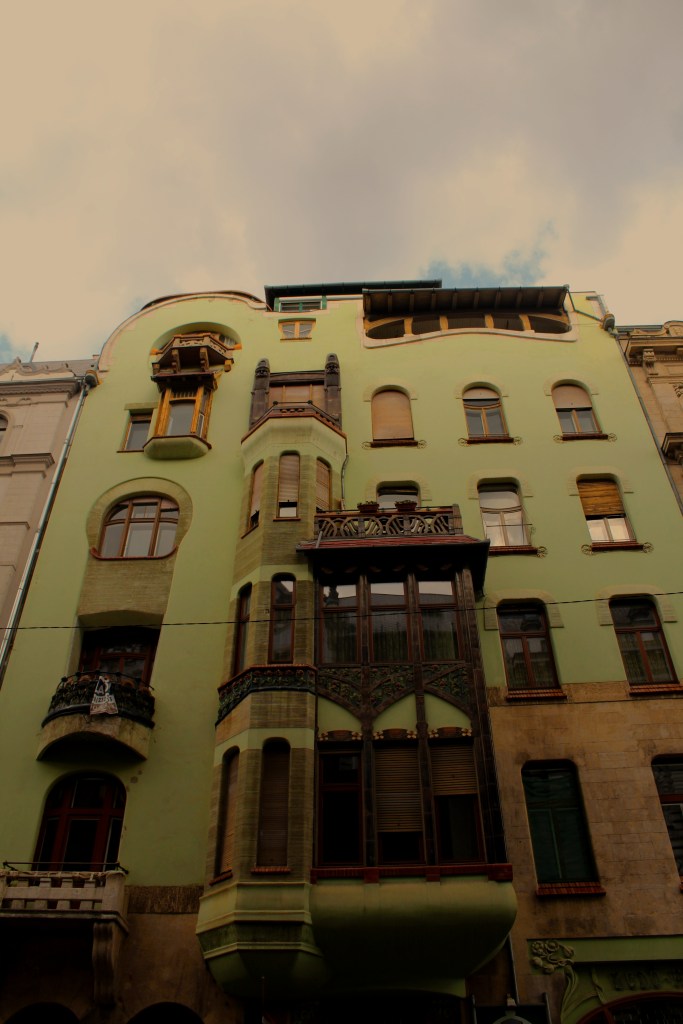
This was an attempt to find new forms and designe inspired by nature.
In the late 19th and early 20tnh century, this lead to tea cups shaped as abstract leaves, or stained glass windows with flowers in geometrical orders. There are so many examples. In my favourite ones, „Art nouveau“ is warm and playful, and invites you to come in, just as this house in Budapest does to me.
So, my favourite style of architecture came to in the late 19th century.
„It made all the modern choices in architecture and design possible“, I explain to my witch. „To think outside of classical palaces, someone had to start over with something different.
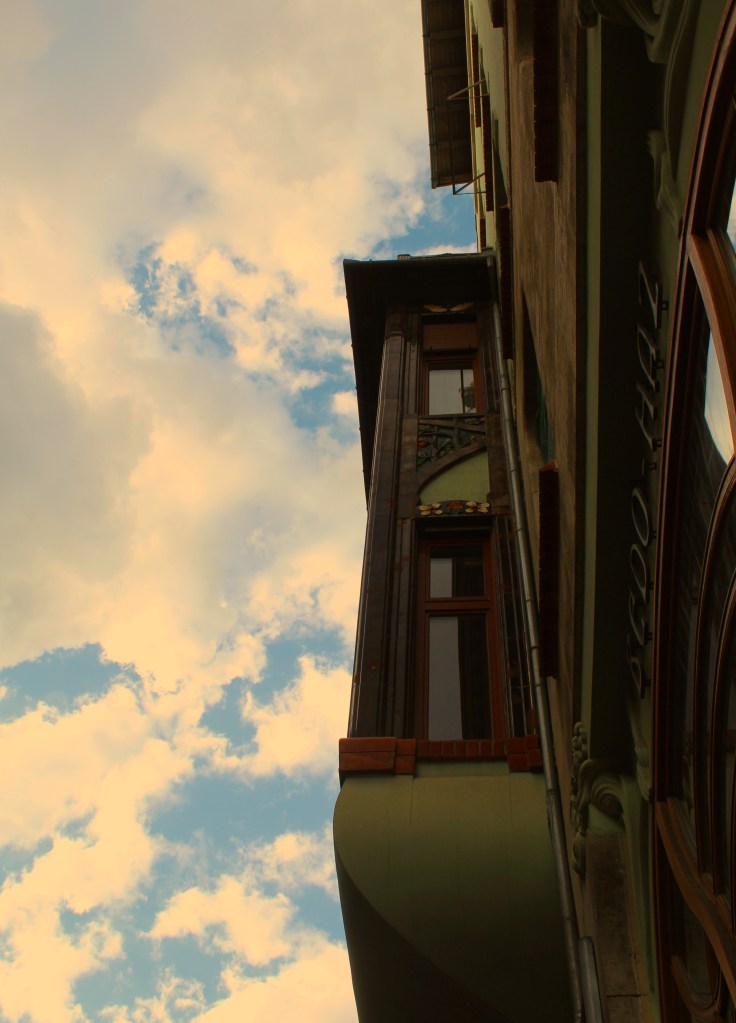
A key feature of „Art nouveau“ is the wish to contrast classical palace buildings of the time, and to find a new language in design, but to also criticize the industrial influence on production. It was the wish to use new materials, to make products easy to to produce and affordable, without losing character.
Leaves and flowers into abstraction were used as a way to save the soul in drastically changing times.
“I thought, you may like this”, I tell Layla. “A house perfectly suited for your witching garden.”
And I see her grin.
„So, you‘re saying, this warm and cozy building was a step to the white and geometrical forms you also like so much?“, my witch asks skeptical.
I have to grin. She remembers my love for „Bauhaus“-Buildings, and I have to nod. „If you want to take new steps, someone has to start thinking things over.“
My witch nods, and I feel reminded of 16-year-old- me, writing an Essay about „Art nouveau“ on a class trip to Amsterdam, and studying Bauhaus architecture for my final exam. It was a wonderful time, where I fell in love with traveling into the historical city centers of Europe, and was in generally so curious to learn about anything I could.
It was a magical time. I think, I will do the 13 hour train trip tomorrow also for past me.
And of course, there are so many more and more famous buildings of this old but modern style to find! I just really liked to show on that is still in use as an apartment building as well as a café.
If you are ever in Budapest and want to visit it, the address is: Honvéd utca 3, 1054 Budapest.
 Mistress witch writes