
„The moon basically asked you to stay awake last night“, my witch giggles over my shoulder as I mix my first iced latte of the day. „And it tasted like strawberries, apparently. Are you on your period by now?“
„Nope, just ended two days ago“, I snap and she laughs once more.
This post is about the moon, and why it is very pretty but does not matter.
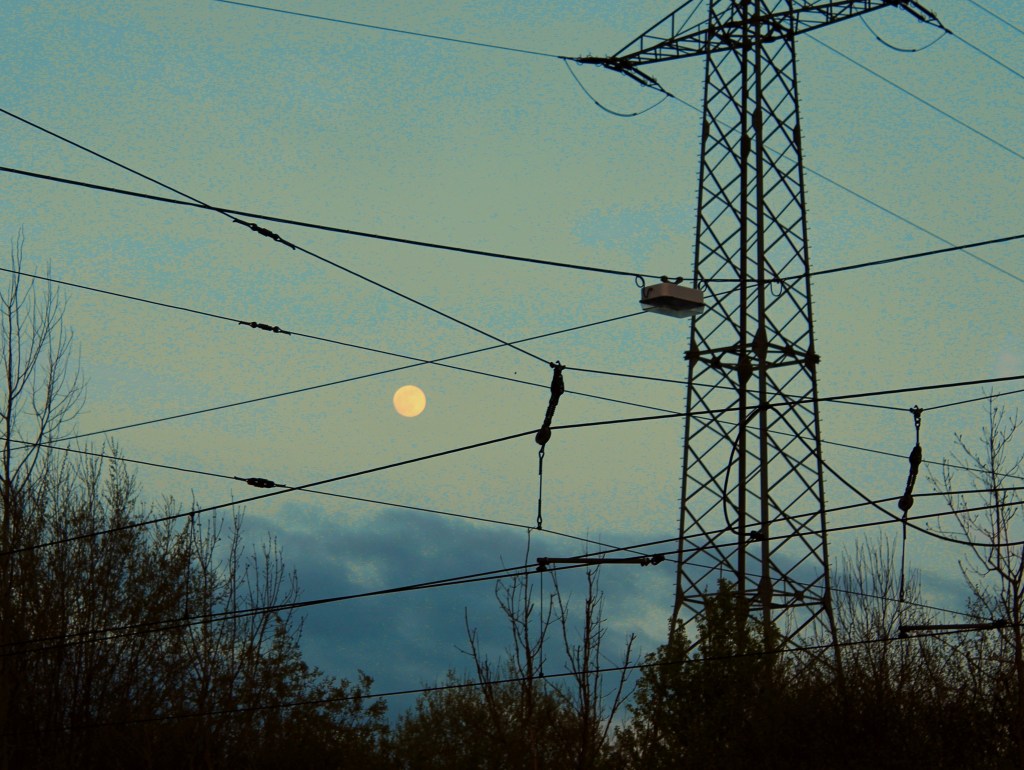
I grew up with stories about the moon. That is just what happens when you grow up in a modern protestant church where everything new-age-esoteric is celebrated. I learned that there were more children born on a full moon, that women likely align there menstruation cycle with the moon phases, and that risky surgeries are better postponed for after the full moon, and it all makes perfect sense and can be proven with a perfectly known and described phenomenon:
It is the moon after all that causes the tides!
If the moon pulls and pushes the sea, why not also the fluids within ourselves? Or, the babies swimming within their mothers? Some people I have met even say they can feel the moon cycle in their blood pressure, but I have to admit that‘s a bit extreme and rare. Still, this superstition towards the moon is commonly accepted and shows up here and there.
And as you know me, I have to deconstruct it. Your local witch, science and history teacher, museum educator. and with my newly started master’s program hopefully officially a science historian soon – I have to take these things apart! So let’s go!
Star gazing is an activity as old as humanity itself, it seems. In fact, people in prehistoric times knew how to navigate or predict the weather by looking at the skies. The mysterious neolithic structures have been identified as stations to observe the sun and the moon, and this is a useful and logical thing to do, if you rely on your environment more directly than we do today in many places on earth.
In this post, I can‘t explain the history of astrology, but rather uncover this one superstition, where it probably came from and why it still survives. And for this, we have to look at medieval medicine.
Body fluids
Nowadays, we know that there are about 5-7 liters blood within our bodies, depending on weight and health. Then, of course, there are other fluids as well, such as gastric acids etc. An idea that was around in medieval times and survived until the early modern era was that of different body fluids having specific functions. These fluids were supposed to be in order and to exist all to the same amount, because otherwise a person might for example experience melancholic moods.
Now to the juicy part of this body-juice-theory: Uterus carrying beings were believed to have more body fluids than men (because of things such as childbirth and menstruation) and therefor were in general more unstable. In „Malleus Maleficarum“, uterus carrying beings are described as more easily affected by all kinds of changes, even by the stars!
Transitioning from medieval to modern times, Europe in general sees itself as making a lot of new scientific discoveries. Even the body juices were proven as not existing in that form at all. So how did this idea survive then? Well … Gravity was discovered!
Gravity
Although observations describing a possible connection between the tides and the moon have been made in the ancient world, it was Newton‘s law of gravity that was able to fully describe and calculate the connection in existence.
When he developed his theory of forces that work from a distance without direct contact, the law he formulated for the force of gravity can actually be used to explain what factors determine how strong the tides are as well as what they depend on. It could be used to explain how the distance to the moon (and to a certain degree also to the sun) as well as the masses of moon (and sun) together with the ocean result in the water being pulled higher together and being let go further into the shore again.
The newly discovered law of gravity can be used to explain how the oceans are pushed and pulled by the moon, so … why not also assume a connection to the human body? We are mode of water as well, right?
Gravity and Us
The reason why the moon does not mess with our bodies can be found in our revolutionary formula we have, and it‘s kind of obvious. To calculate the force of gravity one object has on another, we need the two masses that are relevant. How the moon has an effect on the ocean does not just depend on the mass of the moon, but also in the ocean‘s mass. I think we can all agree on the fact that we as people have much less mass than the ocean, but we still have mass, right?
So, how much does gravity actually affect us?
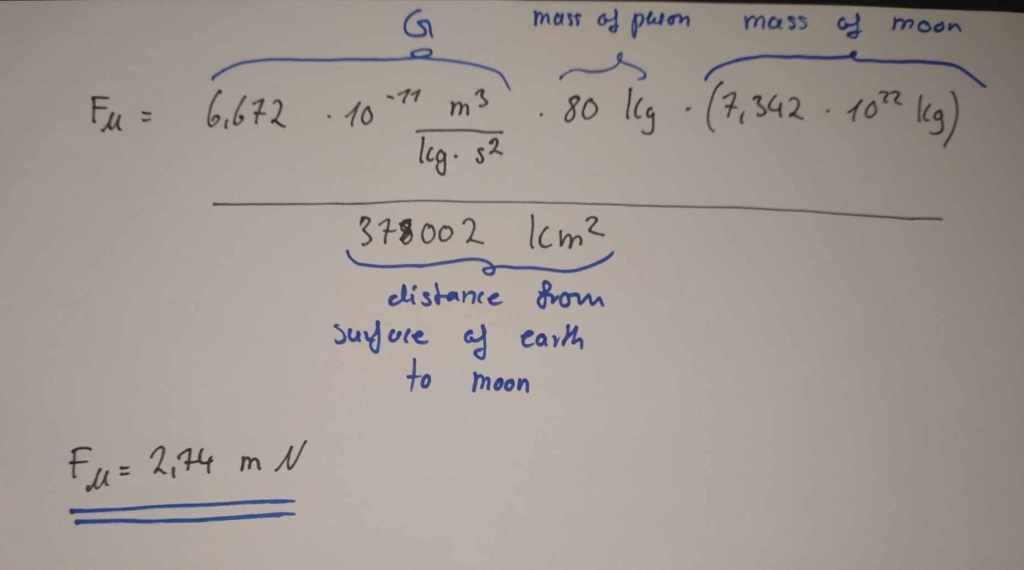
As you can see, the results are written down in the unit Millinewton (a thousand times a Millinewton make up one Newton), because otherwise the number would be annoyingly small. You can compare this to the effect a car driving close by has: It‘s so minimal, it basically does not matter. A car rushing past as does not start periods, or pulls out unborn babies. Walking by a busy street and having hundreds of cars driving by also does not.
The most important reason for this is the fact that our mass is so little. As you can see in the formula used, we have to multiply both masses. One of them being as little as our body mass has an effect on the result.
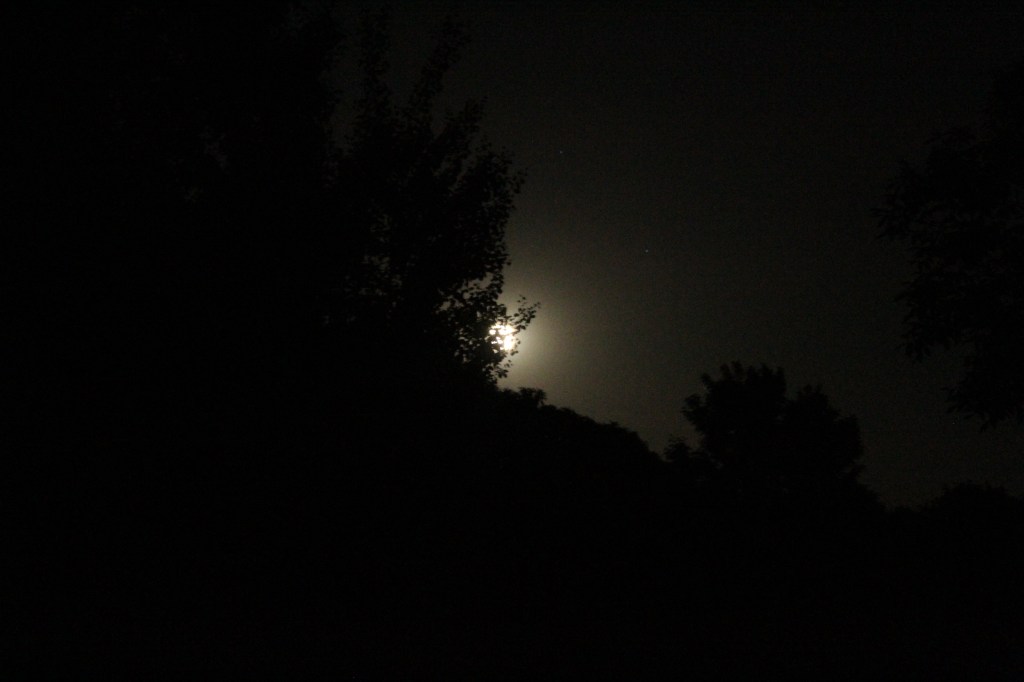
The moon however has a result not just on the sea. There are rivers that also show variations as a kind of tide, just not as easily visible to the naked eye. Even trees and parts of the earth crust expand according to the tides. Once again, these changes are small, because the mass is less and these are solid objects. Fluids have more mobile particles (without getting too deep into my other passion: Chemistry!), and therefor can be easier moved around like that than solid masses.
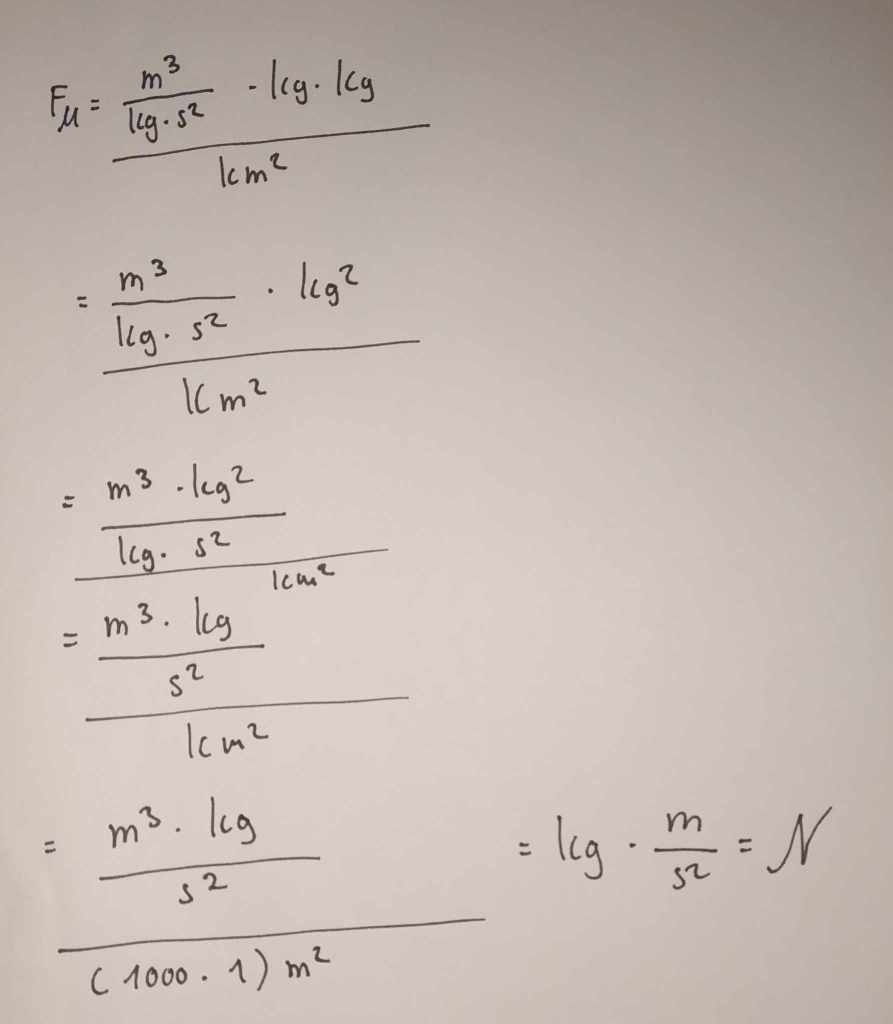
If you have never dealt with these kinds of formulas before, maybe this will help a bit. I leave out all the huge numbers and only deal with the units themselves. The first version still looks messy, but as you can see, I can play around with it until I have brought it into the shape of the unit N („Newton“), which is the unit used to describe force in. To get the result, I do the same but with huge and unhandy numbers.
So, we are too small. We don‘t have enough matter, enough mass.
„Almost as if we do not matter“, my witch giggles into the Iced Latte she stole from my hands.
„Or the stars don‘t matter“, I respond, so thoughtful that she makes a face.
Is that really all to it? No effect at all? The moon, the sun, the stars completely irrelevant?
Not exactly. This combination of medieval medicine and a misconception of the more modern discovery of the law of gravity does not work and I have shown why. There is something about the moon that deserves attention though. Just as the sun, it is a relevant light source to mess with our metabolism. For those living outside of the cities and with less artificial light sources, the moon phases can have an impact on sleeping pattern, as well as other body functions. There is a recent study that claims to have found a weak link between moon phases and the menstruation cycle. However, the data does not seem to allow any conclusive statements yet, since it was gathered from diaries of only 22 women, and even there the link was weak and depending on general cycle length (which differs from person to person naturally). Not that I do not appreciate the effort, but I journal and I know how even short term memory can be a messy thing.
And still, I find it worth mentioning this. Because the moon and the stars are relevant. They shape our lives, just not in the dramatic way superstitions like to convey.
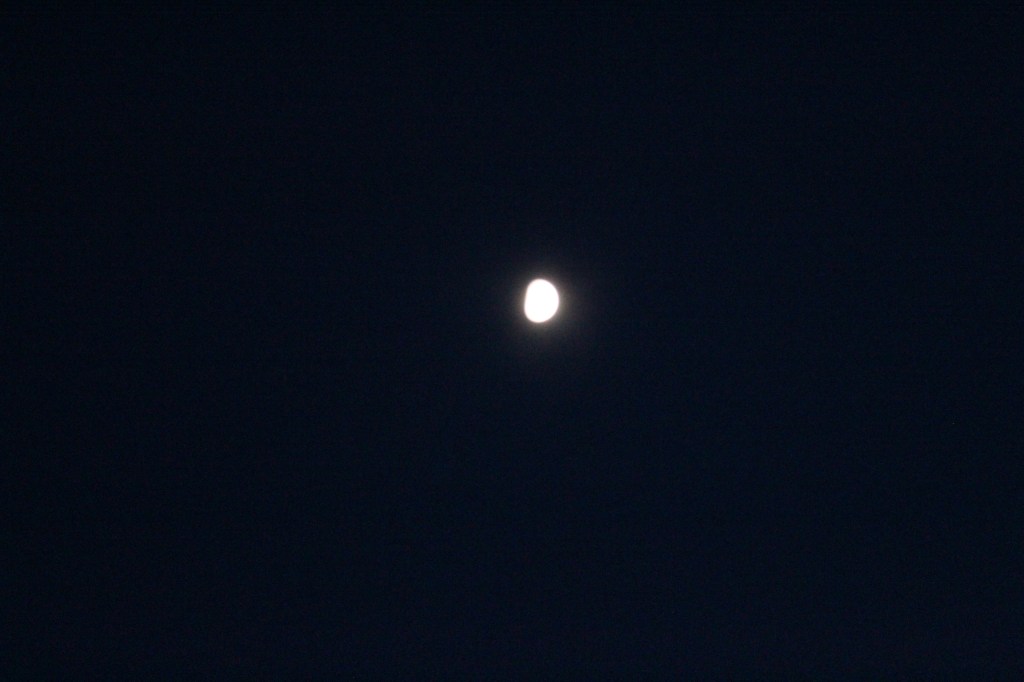
The moon keeps us from cooling out during the night and is a relevant light source that fulfills countless of functions for life on earth. It is this mysterious mass in the sky that helps us not get lost in the darkest forest, and although it tends to disappear, it always comes back eventually.
Isn‘t that alone magical?
“It is!”, my witch admits. “But I’m cross, because I was born a few decades too late to witness this discovery!”
For more information on this short view on women in medieval theories, read “Malleus Maleficarum”. Also:
https://science.nasa.gov/resource/tides/
https://www.the-scientist.com/menstrual-cycles-intermittently-sync-with-moon-cycles-study-68429
 Mistress witch writes